Abi Brennan
BRE07124310Here is the radio drama we made for our A2 coursework.
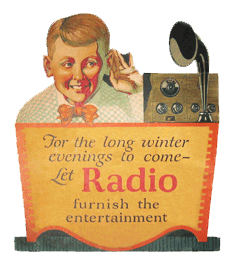


 One of the most famous radio dramas ever to be broadcast was Orson Well's 'The War Of The Worlds' in 1938. The recording was from a H.G. Wells novel about an alien invasion on the earth. The broadcast was an hour long and included simulated news bulletins stating that aliens were attacking the earth, these fake bulletins scared listeners because they thought the programme was factual but adverts were inserted during runtime to clear up any confusion. Afterwards the programme got a lot of bad press because it had been misunderstood and people thought it was deceptive.
 Other famous radio dramas to be broadcast are 'The Hitchhiker's Guide to the Galaxy' and 'The Twilight Zone'. The Hitchhikers Guide to the Galaxy was first broadcast in 1978 up until 2005, and it is still sometimes on. The award-winning science fiction/comedy programme lasted 26 episodes and was broadcast both in the UK and in America.
'The Archers' was created by Godfrey Baseley who has written over 16,000 episodes, and it is one of the longest running radio soaps. It was first broadcast on the BBC Light Programme, then on the BBC Home Service and it is now broadcast on Radio 4. The Archers is set in rural England and is about a middle class family who own a farm.
Another poignant radio drama was 'Mrs Dale's Diary', the drama is poignant because it was broadcast from 1948 until 1967 and it addressed sensitive issues of the time, such as homosexuality. It was about a middle-class Doctor's wife who kept a diary of her daily affairs and one of the starring characters was a homosexual, this is significant because homosexuality was still illegal here in the UK until 1967.

The invention of television may have stifled the popularity of radio somewhat but for some programmes radio was a doorway to televison, and therefore to more fame. Television programmes and films that started as radio programmes include 'Little Britain' and 'The Hitchhiker's Guide to the Galaxy'.
 Our audience feedback showed us that our radio drama was generally well liked. The feedback helped because it gave us a clear idea of what people wanted and showed us what to improve if we were going to do it again. Most of the audience said they liked our use of sound effects and voice acting, they said that the sound effects created the atmosphere well and that the voices helped to create realism. Some people also said that they liked the way our radio drama was reminiscent of film, as well as radio drama, which is what we were going for as film noir is generally a style used in film.
 we believe that older people would enjoy our piece, we are aware that people interested in film noir and many other age ranges would enjoy it too, most likely young men aged from 20 and up. For this reason if our radio drama were to be broadcast I would like for it to be on Radio 3 or Radio 7.
 I believe that people older than 40 would enjoy our piece the most because they will be able to perceive and visualise the film noir genre better because there would have been more film noir text as they were growing up, compared to the amount of film noir text when people my age were growing up.
Attracting the audience for our piece was done by creating advertisements that clearly expressed the film noir genre which produced interest as it was quite an innovative idea for radio drama. We tried to use colloquial language people would have used in the 50s but would also understand nowadays, I believe this is a unique selling point of our piece as the style of discourse is reminiscent of what the audience would have heard in other film noirs but has its own modern chic.

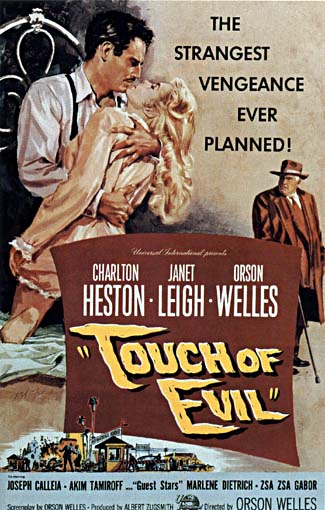 Transgression is also similar to the film 'A Touch Of Evil' which is an Orson Welles film. The film includes many negative themes such as drugs, racism and murder juxtaposed to one outlandish good cop who will do anything for reparation, much like Justice in Transgression.
 Twilight Zone is a radio drama in the style of film noir, we listened to it and decided we should construct our radio drama in a similar way to how the Twilight Zone is constructed by using similar cues and links.
 recording audio from the internet. We did this using a programme called Audio Hijack pro, this programme enabled us to record off the internet to use on our recording. We also recorded our own sound effects using college equipment, we recorded the sound of a door opening and closing because the other door sound effects we found didn't sound right on our recording.
 We set our radio drama in Detroit to stick to the authentic film noir style which meant that we had to record with American accents, as opposed to our English accents, we also had to write the script in a similar way to old film noir scripts by using American terminology and 1950s colloquial language because this added to the realism of the piece. The accents and the strange lingo proved to be quite difficult at first because as we were afraid it might make our radio drama seem light hearted and we kept on slipping back into our original accents but after recording multiple times our accents improved tremendously and we had enough to use in post-production. We needed a lot of material to work with as their were some sound disturbances in our recordings such as page turning and noisy students, but recording multiple times meant we were able to get around any unwanted audio.
 We used music in our piece as a link at the beginning, after "previously" until the start of the episode, and to set the atmosphere. We found the a short jingle in the royalty free music archive at college and added sound effects to it to create a theme tune for our drama. We also found a 50s style jazz song in the archive which we used in the scene between The Sconer and Abby and added people sound effects to make it sound like people were talking around them.

Social groups generally represented in film noir media products are private detectives who don’t play by the rules, high flying, wealthy women and seedy criminals. Our radio drama represents social groups similar to generic film noir but slight differences include; the detective in our piece works for the police and the femme fatale in our piece is the Chief’s daughter rather than an actress or a model.
 Abby will do anything to get what she wants, even if it means deceiving her own father and framing one of his closest friends and best officers.
 Detective Justice was based on the generic film noir idea of corrupt law enforcement but was represented in a relatively good light,
making him somewhat of an anti-hero. Justice doesn’t agree with the depth of the corruption around him but he isn’t perfect either; he doesn’t mind bending the rules to get what he needs, however, he would never kill in cold blood. Based on the representation of Justice in our piece, the police are represented as a group of people who use unconventional methods to enforce the law and have a pessimistic outlook on life due to the hard times they have had to endure.
The Sconer is the criminal in our piece, he is arrogant, sly and hungry for power. The Sconer is said to ‘kill for sport’, this shows that he is uncompassionate and cold. This represents criminals in a very bad way, implying that they will kill for fun and show no remorse. The Sconer’s only ally was Abby, this indicates that he had some wealth and status because of her shallow nature and it shows that he has friends in high places, which implies that criminals are wealthy and can gain immunity to the law depending on who they know.
I researched radio drama and film noir using the internet, by watching films and by listening to radio dramas. We had to find out about film noir in detail in order to effectively impersonate the style for radio and I believe that watching old film noir movies such as 'Touch Of Evil' (1958) and 'Laura' (1944) helped to develop my knowledge thoroughly and using the internet meant I could read about the general conventions of noir as well. I listened to many radio dramas but the ones I found most helpful in developing my knowledge of radio conventions were 'War Of The Worlds', 'Twilight Zone' and 'The Archers'. We also had to use a file hosting website called mydatanest.com to host the clips that are on our blogs. The clips were uploaded to the website and we used the Html codes on our blogs that blogspot would understand.
We recorded our scripts using the microphones and radio equipment, the track went on to the Mac in the radio room and we put it on a usb to edit it in class. After recording our radio drama we used Soundtrack Pro to edit it. I had never used this software before but I had used Final Cut Pro which is relatively similar. The general idea and processes on both the programmes are similar so I didn't find it hard to work, it was mainly cutting the clips, adding transitions and adding sound
effects. All the other people in my group were familiar with different audio software and film software so we all had some understanding of how to work Soundtrack Pro.
I used InDesign to make my poster and radio listing page, this was easy because I learned how to use it last year. The only problem I encountered was when I was editing the picture for my poster. The reason I found this problematic was that I am not familiar with photo editing software such as Photoshop. I managed to overcome my photo editing problems by playing around with Photoshop and eventually getting the hang of it. To make the picture look older and more film noir I used a 'sketch' filter and desaturated the colours.

Original picture

Edited picture
Before making the advertising poster for the radio drama I planned it out on paper but when I finished this design on InDesign I decided I didn't like it so I started again and created a poster I was happy with.

First design of poster

First design of radio listings

Final design of poster

Final design of radio listings
I believe that the combination of our radio drama and my ancillary texts are very effective. Alone they all give the impression that the radio drama is in the style of noir but combined they fit together to represent the film noir style and atmosphere with professional looking aesthetics. If our radio drama was actually going the be broadcast the listings page would have helped create audience interest because the 'pick of the week' was Transgression. The pick of the day box has writing in it describing the radio drama with a picture of our 'poster boy' in 1950s apparel. The writing in the box says;
"Transgression made a storm in the radio drama world last week when it was first aired on Radio 4.
The moody thriller is set in 1950’s Detroit, deep in the shadows and dark alleys of a film noir atmosphere.
Stunning performances are given by all the actors, adding to the raw realism of the series, which compliments the compelling storyline and really gets the listener hooked.
This week Inspector Justice thinks he’s getting closer to catching the murderer of his partner, little does he know the murderer is closer than he thinks."
I think this write-up is attention grabbing and sells the radio drama well. The poster I made also represents the radio drama well as it is eye catching and clearly accentuates the style of the radio drama, leaving people who see it curious about the product.
